

Welcome to my speaking page! When it comes to speaking publicly, I try to only talk about things I’m passionate about, and therefore know well, since it helps with eliminating anxiety.
Once you get rolling on something you love, you forget all the many things that might’ve made you scared about presenting in the first place, and the impostor syndrome rolls away. Well, sometimes at least.
My talks tend to stay in the realm of technology, but I’m always open to speaking on anything within my areas of interest. Scroll through to watch some of my talks, browse my workshops, and see what I’ve been up to.
If you’d like me to speak at your event, get in touch!
Watch
Stuff from my YouTube channel of me talking about things.
Talks & Workshops
Here are some of the talks and workshops I’ve developed. I try to keep this section updated, but I’m always working on new ideas. I’m always happy to adapt the format, length, or other details for different audiences, or create something entirely new!
Best For: Software developers and other technical individuals who build stuff with AI agents
Format: 20-30 minute talk
For many of us software developers, writing code was how we understood a system, shaped it, and found joy in our work. As AI writes more of the code, some feel more creative than ever, while others feel they’ve lost the very thing they entered the profession to do.
The “children yearn for the mines” meme jokes that we got kids out of dangerous mines, only for them to happily pick up virtual pickaxes in Minecraft. Minecraft lets kids express their creativity and figure things out as they build a world of their own. So when AI writes the code, how do we build that same kind of connection to the systems we’re creating?
In this talk, we’ll explore ways to maintain cognitive ownership of systems built with agents, drawing on examples such as Matt Pocock’s grilling skill and Geoffrey Litt’s explain-diff. We’ll also use Andrej Karpathy’s distinction between loving coding and loving building to examine why some of us enjoy this shift while others feel reduced to “looks good to me” merchants. You’ll leave with resources for understanding AI-generated code and retaining technical ownership of the systems you’re building, alongside the reassurance that you’re not alone in seeking a way back to craftsmanship. A way back to the mines.
Best For: College students and working professionals, with versions tailored for general and technical audiences
Format: 60 minute interactive talk or hands on workshop
With the rise of Agentic AI, Uncle Ben’s “with great power comes great responsibility” warning has never felt more relevant. AI agents can gather information, use tools, make decisions, and take action with limited human direction. Everybody’s talking about them, but ask 10 people what an agent is and you’ll get 10 different answers.
So, what makes a system agentic? What separates Agentic AI from Generative AI and ordinary automation? And where does human responsibility still lie?
Depending on the audience and format, participants either investigate AI agents through a game or build one themselves. Each game round reveals an agent’s goal, prompt, and seemingly successful output, then challenges the room to uncover the failure, risk, or human effort behind it. General audiences get AI remixes of real business disasters, while technical audiences get cited engineering incidents. In the hands on version, participants interact with a working agent, write its instructions, choose its tools, and try to get it onto a shared live feed.
By the end, participants understand LLMs, RAG, MCP, RLHF, context, and context windows through firsthand experience. They see what Agentic AI can do, where it falls short, and why the growing field of AI Engineering still needs humans in the loop.
Presented At: SEO Career Summit 2026 · SEO TechDevCon 2026 · UNC Charlotte Women in Data Science Conference 2026 · PMI Carolinas Professional Development Day 2025 · Numerous Discovery Days at Microsoft Charlotte
Resources: Companion Article · Hands On Workshop · General Audience Gamified Deck · Technical Audience Gamified Deck · Hands On Workshop Deck
Best For: Middle school, high school, and college students, as well as working professionals, with versions tailored for technical and nontechnical audiences
Format: 60 minute interactive talk or hands on workshop
ChatGPT can feel like magic, but underneath it all, it’s making highly educated guesses based on patterns. This AI Literacy workshop takes an intentionally oversimplified dive into machine learning, neural networks, and deep learning by turning participants into the computers.
They start by writing traditional programming rules for recognizing a cat, then watch those rules break on wolves, cartoon cats, and other edge cases. This leads into an approachable understanding of supervised learning, where computers learn patterns from labeled examples instead of relying on written rules.
Next, they guess missing words in sentences. Familiar phrases are easy because they’ve seen them before, while random sentences are nearly impossible without context. That contrast leads into an understanding of self-supervised learning, where large language models (LLMs) learn language patterns by guessing, checking, and adjusting across enormous amounts of text. Depending on the version, they also learn to recognize an unfamiliar writing system from examples or train and tune a simplified LLM with code.
By the end, they’ll understand how examples become patterns, how patterns become predictions, and what makes training AI models so expensive. The result may seem intelligent, but it’s fundamentally pattern recognition at scale, and still requires human guidance and oversight.
Presented At: Numerous Discovery Days at Microsoft Charlotte, including this one with Carolina Youth Coalition · PMI Carolinas 2025 Kickoff · Demystifying AI With Techsgiving
Resources: Companion Article · Language Activity Deck · Coding Activity Deck · Facilitation Guide · Inspired by Parand Tony Dugar’s articles on AI, ChatGPT, and Deep Learning
Best For: College students studying computer science or related fields
Format: 60 minute hands on workshop
AI-assisted coding is everywhere now. Companies like Canva and Meta even let candidates use AI coding tools in technical interviews. So if candidates can use AI to write the code, what are interviewers actually evaluating? What does software engineering require beyond writing code, and how do you prove you can do the job?
In this workshop, students tackle 5 increasingly realistic challenges with a custom AI agent as their pair programmer. They start with familiar LeetCode problems, then move into incident log triage, API verification, and turning a script into a product anyone can use. Every challenge follows Plan, Prove, Explain. They can use AI for everything, but they must understand the output, explain their decisions, and prove the result works.
AI can write code, but it can’t do your job. Your job is to deliver code you have proven to work.
Presented At: UNC Charlotte Industry Day · Microsoft Charlotte AI Engineering Summit With Central Piedmont Community College
Resources: Workshop Website · How This Workshop Was Built · GitHub Repository · Companion Article · Presentation Deck
Best For: College students studying computer science or related fields
Format: 60 minute interactive talk
AI-assisted coding is everywhere now. Does that mean it’s over for software engineers? Not at all! After a quick history of AI, participants work through a live next token prediction exercise to see how LLMs work under the hood. From there, we examine the increasingly popular argument that writing code was never the real bottleneck in software engineering.
Participants meet AI Engineering, an evolution of software engineering that connects AI models to real systems, data, and tools. They learn how it differs from Machine Learning and which technical skills still matter when developers use AI to write code. We also follow the money through GPUs, data centers, and layoffs, cutting through AI washing to separate job replacement from corporate cost cutting. By the end, they’ll understand that AI accelerates the work, but engineers still own the result.
Presented At: SEO TechDevCon 2025 · NC A&T and Winston-Salem State University College Discovery Days
Resources: Companion Article · AI & Your Tech Career · Presentation Deck · The Rise of the AI Engineer · The Concerns That Inspired the Talk
Best For: Middle school and high school students of all backgrounds
Format: 60 minute interactive hands on workshop
AI can generate an image in seconds, but creativity still belongs to the human behind the prompt. Students start by matching an AI generated image to 2 possible prompts, 1 weak and 1 detailed. The choices start close enough to make the game challenging, but soon reveal how specificity, clarity, and creativity shape the result. Students then put that lesson into practice using structured, fill in the blank prompts to create their own image with Microsoft Designer. They leave with an image they conceived and directed, using AI as a tool to bring their idea to life, and a clear understanding that AI supports human creativity rather than replacing it.
Presented At: Numerous Discovery Days at Microsoft Charlotte · Charlotte-Mecklenburg Schools Bases Loaded 2025 · Charlotte-Mecklenburg Schools Bases Loaded 2026 · Black at Microsoft Minority Student Day · NSBE Charlotte STEM Fair
Resources: Companion Article · Workshop Website · Presentation Deck
Best For: High school and college students interested in AI, programming, or robotics
Format: 60 minute hands on workshop
AI models can be brilliant, but they need specific context to be useful. Students start with an AI chat interface that only knows how to send 3 basic commands to a Petoi ‘Bittle X’ Robot Dog. Their job as AI Engineers is to teach it what else the robot can do.
Using Python, VS Code, and GitHub Copilot, students read technical documentation, add robot commands, make the system show exactly what the AI sends to the hardware, combine simple commands into complex behaviors, and connect the model to live documentation through a simplified version of retrieval augmented generation (RAG).
By the end, students have seen both sides of AI Engineering. Traditional code controls the robot directly, while context teaches AI how to control it.
Presented At: Charlotte-Mecklenburg Schools Bases Loaded 2025 · Carolina Youth Coalition Discovery Day with recaps from Microsoft and Petoi
Resources: Companion Article · Workshop Code · Facilitation Guide · Petoi Robotics Curriculum Feature · Petoi Workshop Feature
Features, Mentions, & Testimonials
Stuff from around the internet where I’ve been featured, mentioned, or talked about. Just keeping track of other people talking about me so I don’t seem too self-aggrandizing on this page.
Segun Akinyemi captivated the entire room, memes and all. His presentation on Agentic AI and the evolving landscape of AI engineering roles was one of the most informative sessions I’ve been to, and left me genuinely hopeful about where tech careers are headed.
SEO TechDevCon 2026 Attendee
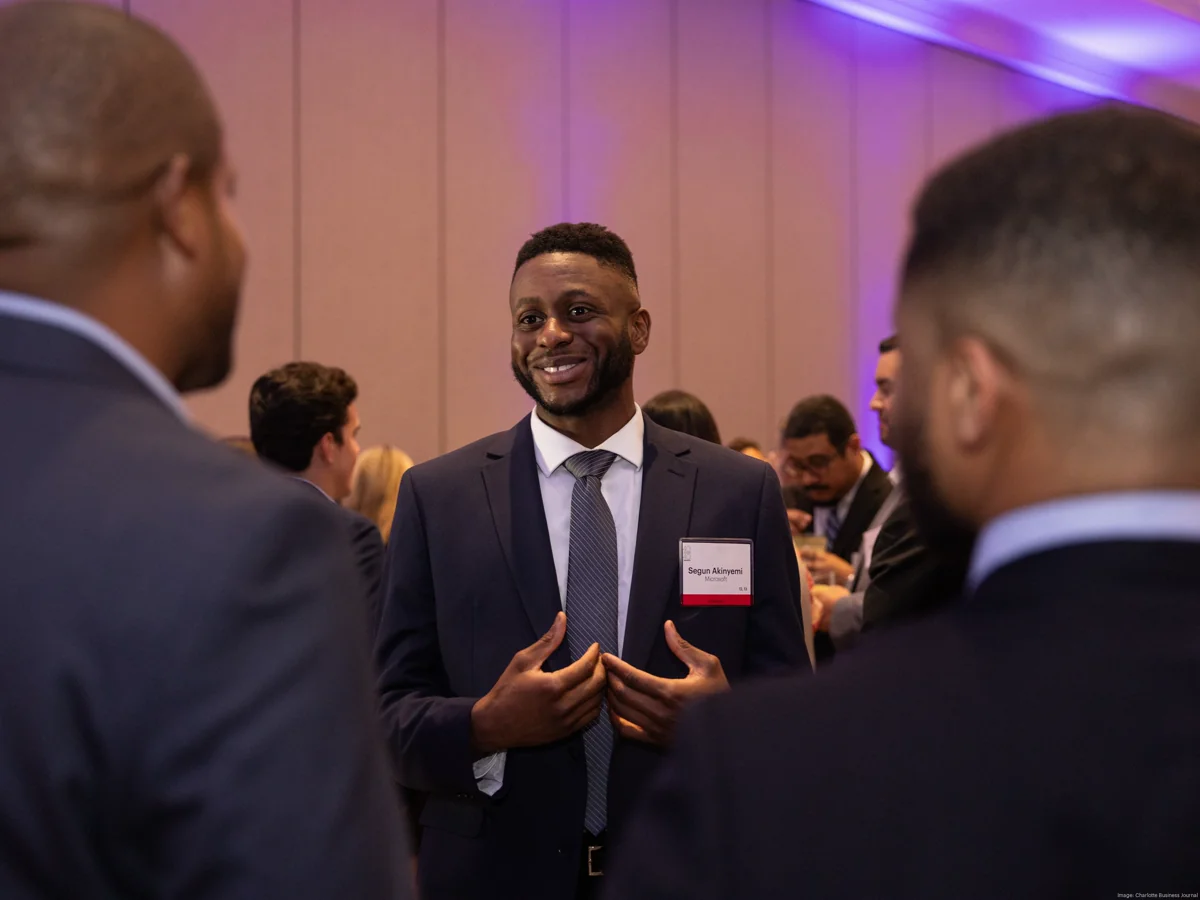
Charlotte Business Journal
Charlotte Business Journal’s 2025 40 Under 40 profile of Segun Akinyemi.
Media & Bio
All this stuff is mine and available for use. Just let me know if you use anything!
Photo Gallery
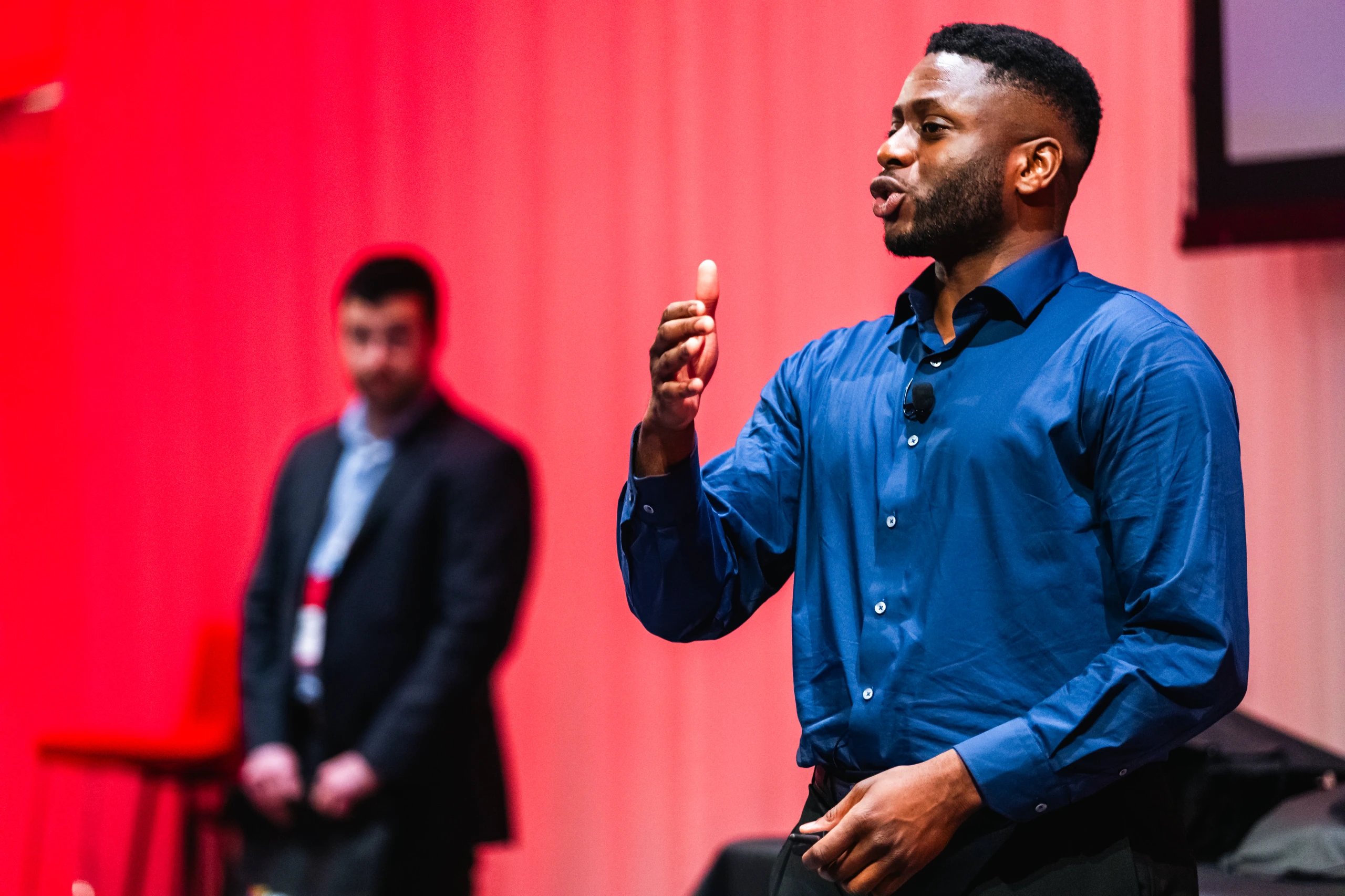
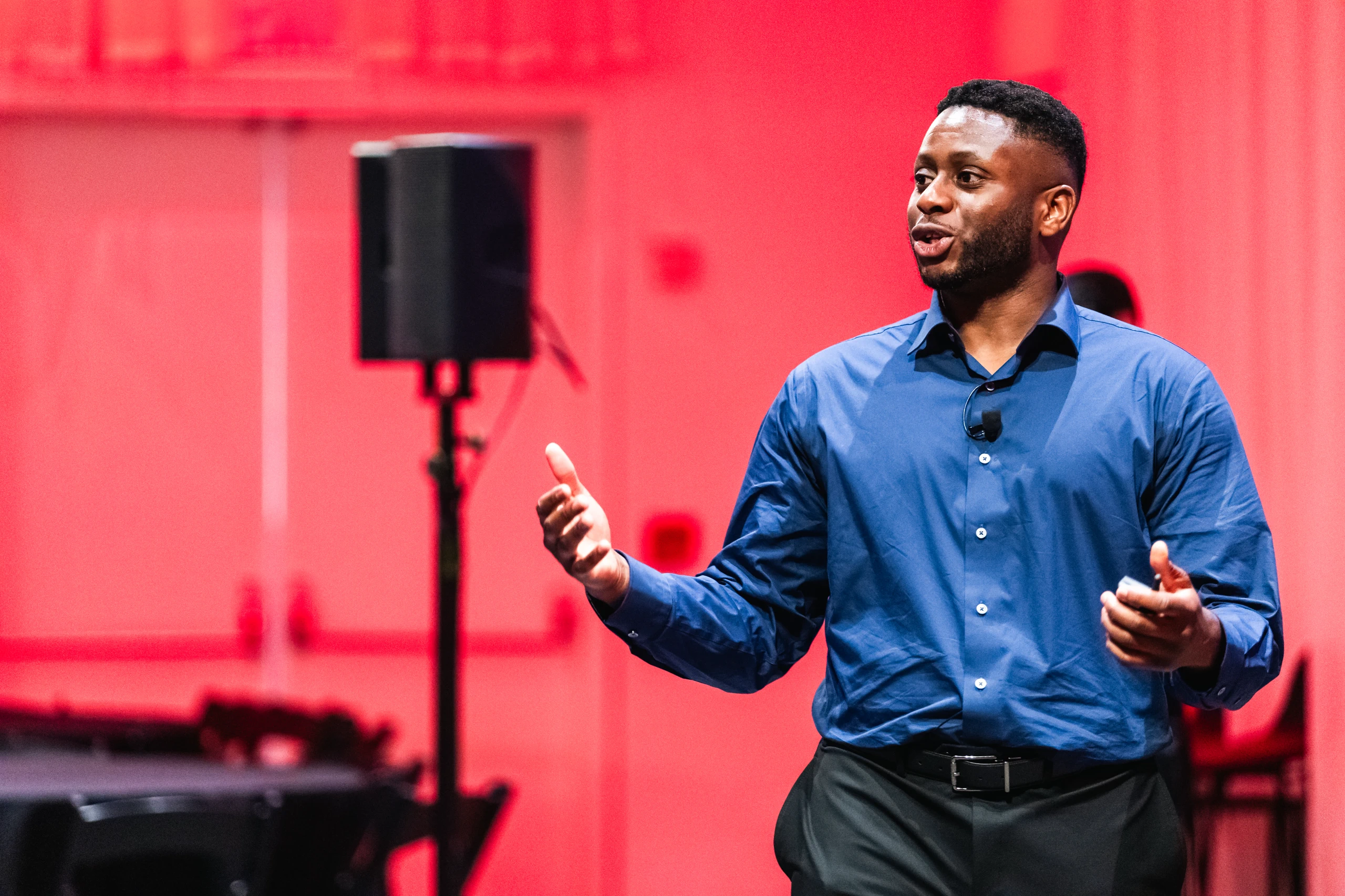
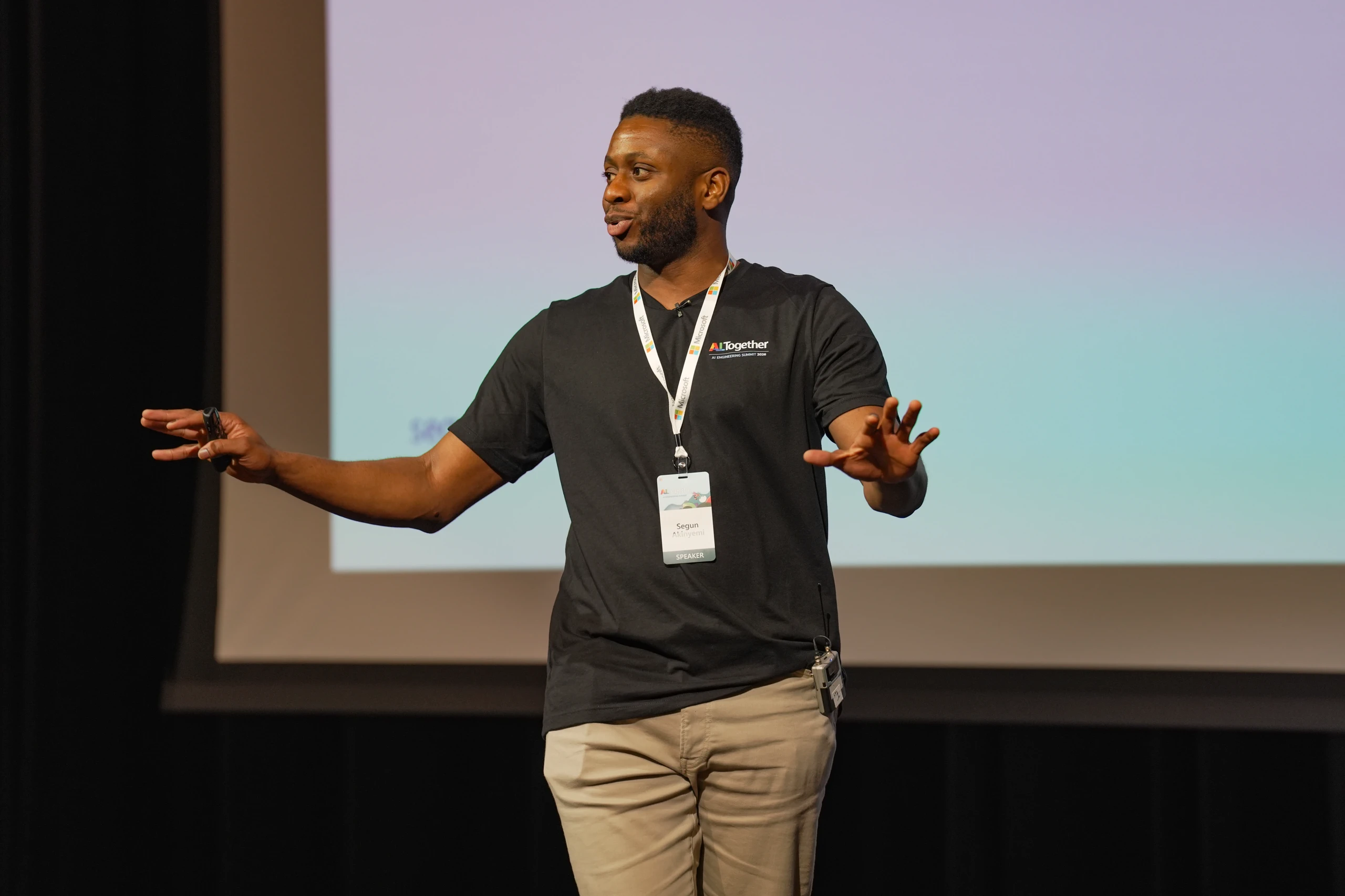
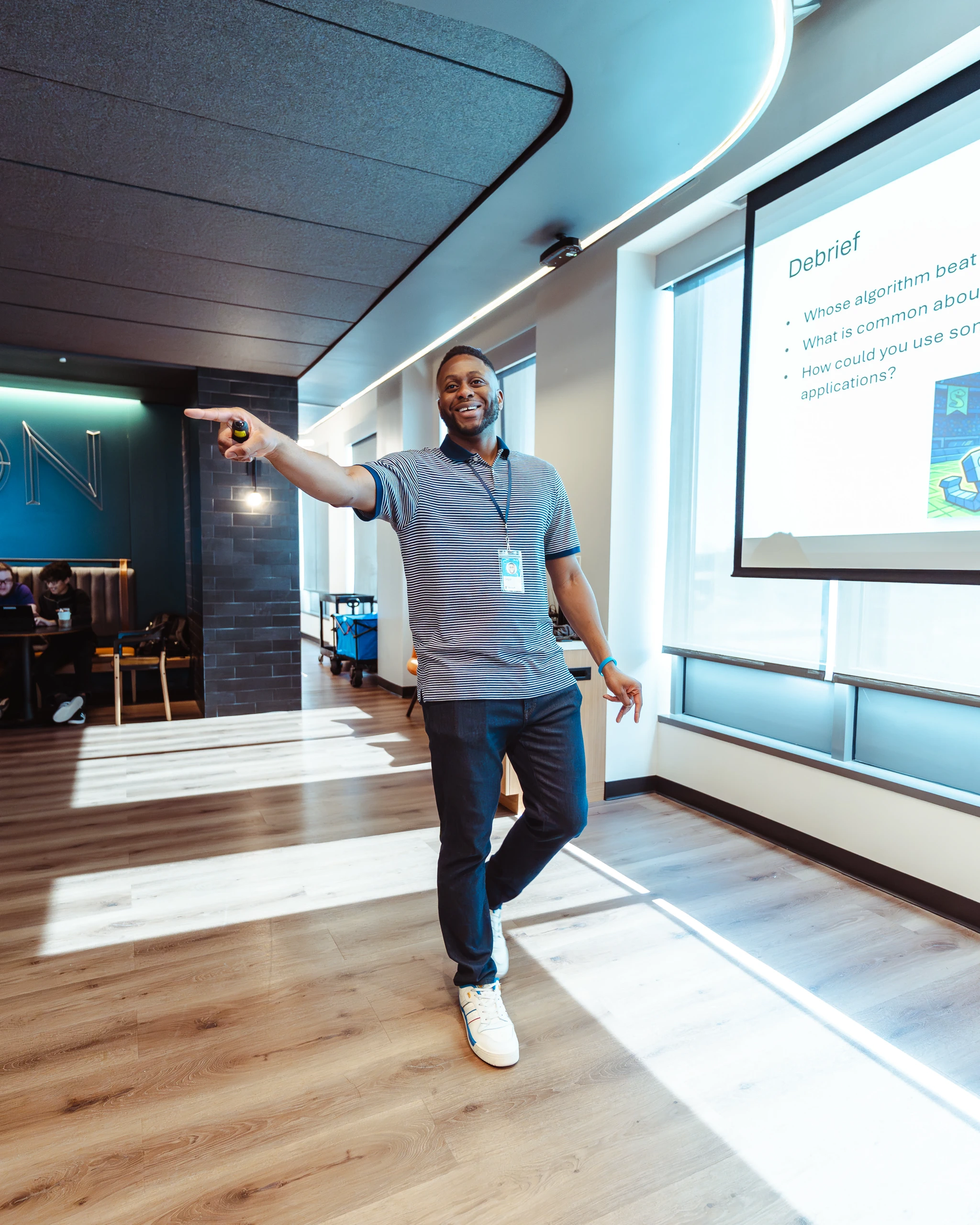
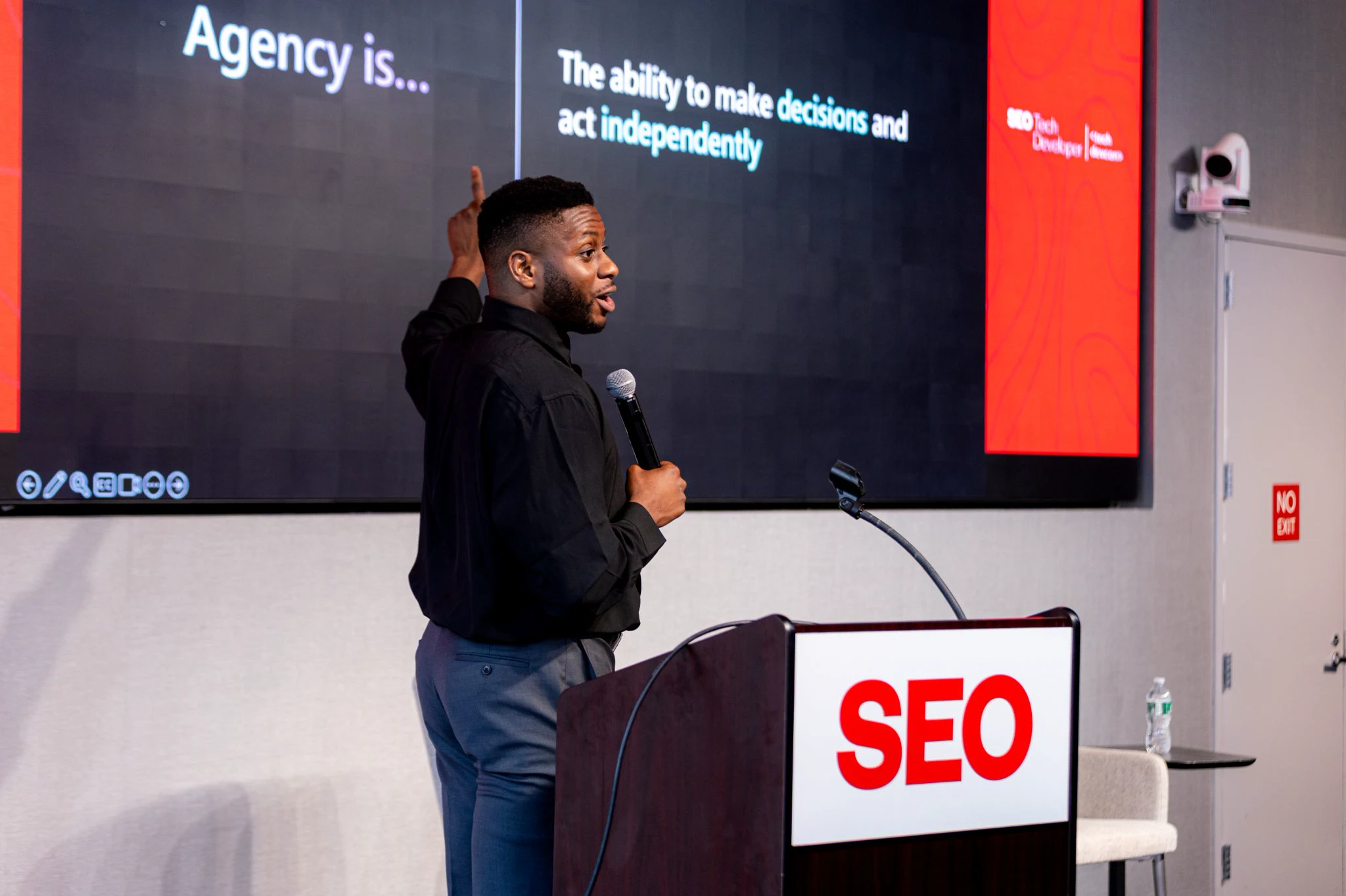
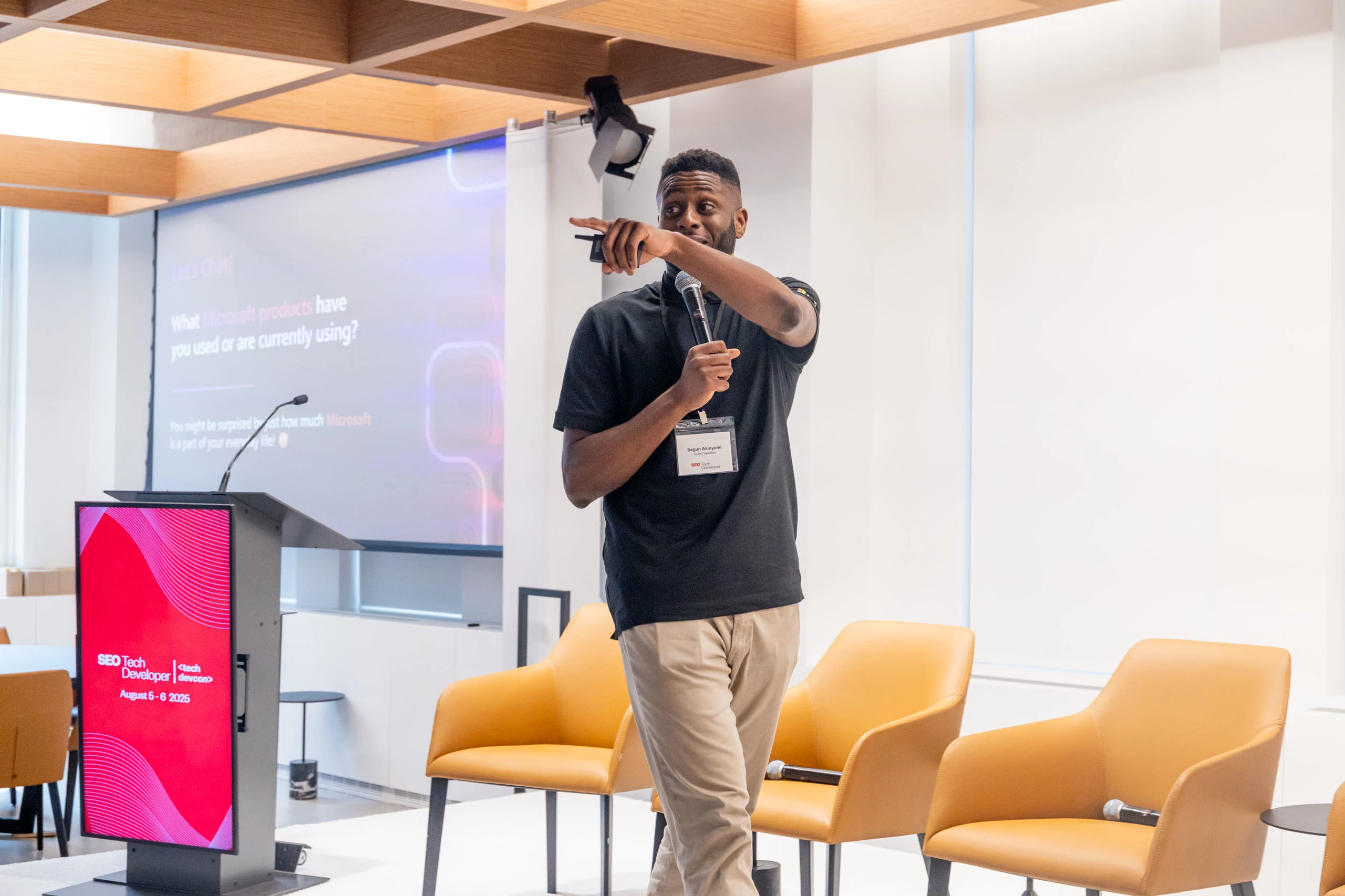
Headshot


Short Bio
Segun Akinyemi is a Nigerian American writer, speaker, educator, and Senior Software Engineer at Microsoft known for explaining complex topics in a practical, down-to-earth way. He writes, speaks, and teaches about software engineering, applied AI, and tech careers, helping students and professionals use AI tools while keeping humans in the loop. Based in Charlotte, he founded Discovery Days, a local field trip program connecting students with STEM opportunities, created and maintains Charlotte Third Places, and was named to the 2025 Charlotte Business Journal 40 Under 40 list at age 28. Learn more at segunak.com.
Long Bio
Segun Akinyemi is a Nigerian American writer, speaker, educator, and Senior Software Engineer at Microsoft known for explaining complex topics in a practical, down-to-earth way. Born in Seattle, educated in St. Louis, and now based in Charlotte, he connects people with knowledge, community, and opportunity through technology.
At heart, he loves education and creating approachable learning experiences, deepening his own understanding along the way. Grounded in his Christian faith, he founded Discovery Days, a field trip program connecting local students with STEM opportunities, and built Charlotte Third Places, a guide to welcoming community spaces around the city. These efforts contributed to his recognition on the 2025 Charlotte Business Journal 40 Under 40 list at age 28.
At Microsoft and beyond, he writes, speaks, and teaches about software engineering, applied AI, and tech careers, helping students and professionals use AI tools while keeping humans in the loop. Outside of work, some of his favorite pursuits include reading, blogging, spending time at third places, searching for the best cinnamon rolls, exploring science fiction and fantasy, and watching anime (Steins;Gate remains his all time favorite). Learn more at segunak.com.
Get In Touch
You can also reach me through my contact page or find me on Sessionize. For a more detailed record of what I have been up to, speaking and otherwise, browse my highlights.